
The Loneliness of Being the Strong One
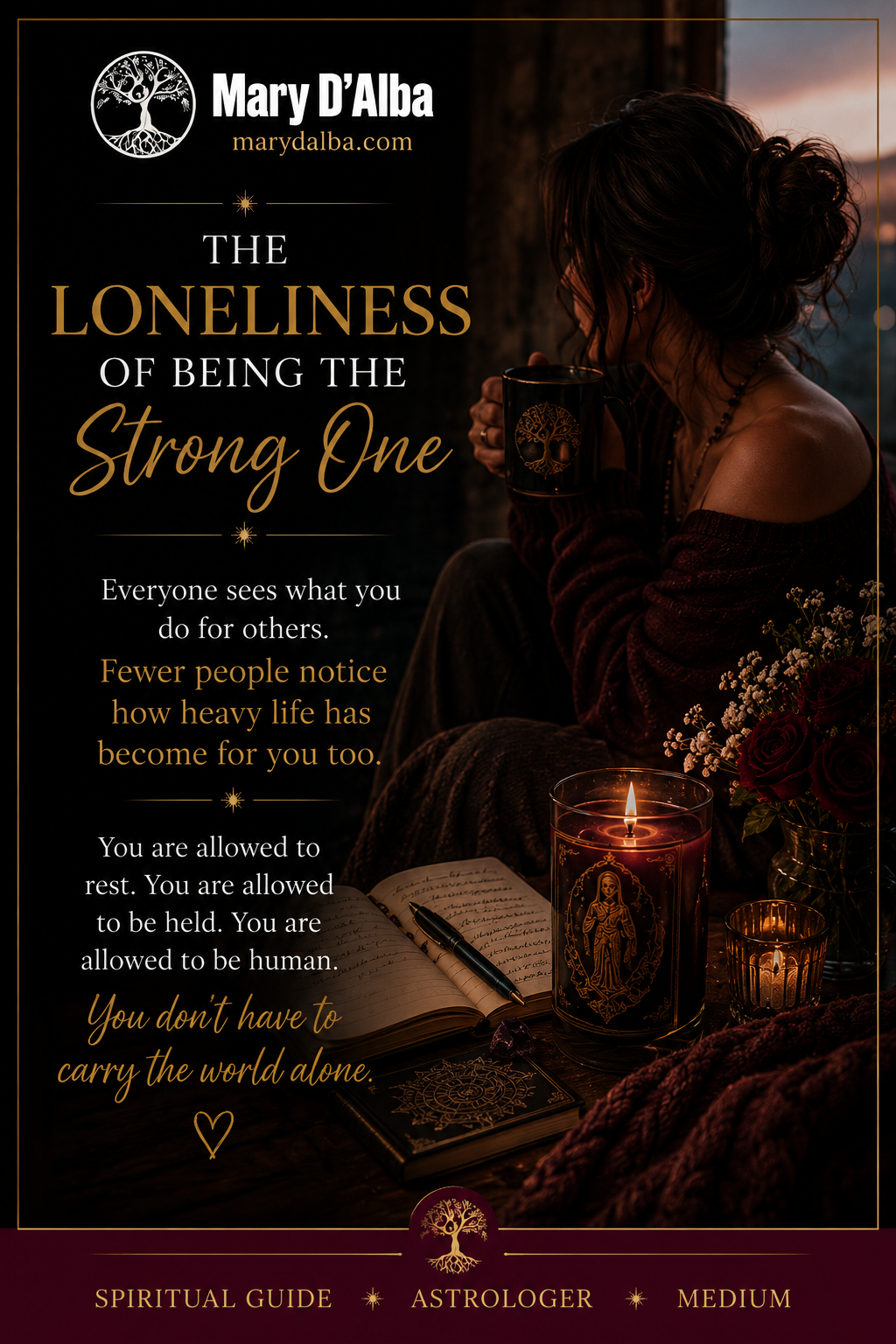
There’s a particular kind of loneliness that comes from being the strong one.
You know the person I mean.
The one everyone calls when things fall apart.
The one who stays calm in emergencies.
The one who keeps going.
The one who somehow figures it out even when life feels impossible.
People admire strong people, but I don’t think they always realize the cost of becoming that person.
After a while, people stop asking if you’re okay because you’ve become so good at carrying things. You handle the crisis. You hold the family together. You listen to everyone else’s heartbreak. You help. You comfort. You organize. You survive.
And somewhere inside all of that, your own exhaustion gets pushed to the side.
I think many strong people secretly become very lonely.
Not because they don’t have people around them, but because they rarely feel fully seen. Everyone sees what they do for others. Fewer people notice how heavy life has quietly become for them too.
Sometimes being “the strong one” starts very young.
You become responsible early. You learn how to emotionally adapt. You learn how to stay composed. Maybe you became the peacemaker in your family. Maybe you learned that your feelings had to wait because someone else’s needs were louder. Maybe life simply demanded strength from you before you were ready.
And eventually strength stops feeling like something you do and starts feeling like who you are.
The problem is, strong people are still human beings.
We still get overwhelmed.
We still get scared.
We still get tired.
We still need softness, reassurance, rest, and support.
But many of us don’t know how to receive help very well because we’ve spent so much time being the helper.
I think some strong people almost feel guilty falling apart.
Like they’re supposed to hold everything together all the time.
I know for me personally, there have been moments where I realized I was comforting everyone else while quietly running on emotional fumes myself. And the strange thing about burnout is that it doesn’t always arrive dramatically. Sometimes it arrives quietly.
You stop feeling excited about things.
You feel emotionally flat.
You’re exhausted but can’t fully rest.
You cry unexpectedly.
You feel lonely even around people you love.
You keep functioning, but your spirit feels tired.
And because strong people are so used to surviving, they often keep pushing themselves long past the point where they actually need care.
I think one of the hardest spiritual lessons for strong people is learning that vulnerability is not weakness.
Receiving support is not weakness.
Rest is not weakness.
Having limits is not weakness.
Needing someone to hold space for you is not weakness.
It’s human.
There’s also something I’ve noticed spiritually: many deeply empathetic people become “the strong one” because they are naturally sensitive. They can feel everyone else’s emotions. They instinctively want to help. They become caretakers emotionally, spiritually, energetically.
But without boundaries, that kind of sensitivity can become exhausting.
You cannot pour endlessly from an empty cup.
You cannot constantly abandon yourself to rescue everyone else.
At some point, healing asks us to stop only being the giver and finally allow ourselves to receive too.
That can feel uncomfortable at first.
Honestly, sometimes being cared for feels more vulnerable than being the caretaker.
But you deserve relationships where you do not always have to be the strong one. You deserve spaces where you can exhale. You deserve people who ask how you are doing and genuinely want the real answer.
And if you’ve been carrying too much for too long, I hope you hear this clearly:
You do not have to earn rest.
You do not have to prove your worth through suffering.
And you do not have to carry the world alone to be loved.
Sometimes the strongest thing we can do is finally allow ourselves to be supported too.
If you’re moving through burnout, caregiving exhaustion, emotional overwhelm, grief, or a season where you feel like you’ve been carrying too much alone, my coaching sessions offer grounded spiritual support, compassionate guidance, and a safe place to reconnect with yourself.
Learn more here:
Spiritual Coaching with Mary D’Alba